
Normal and Painless Deliveries
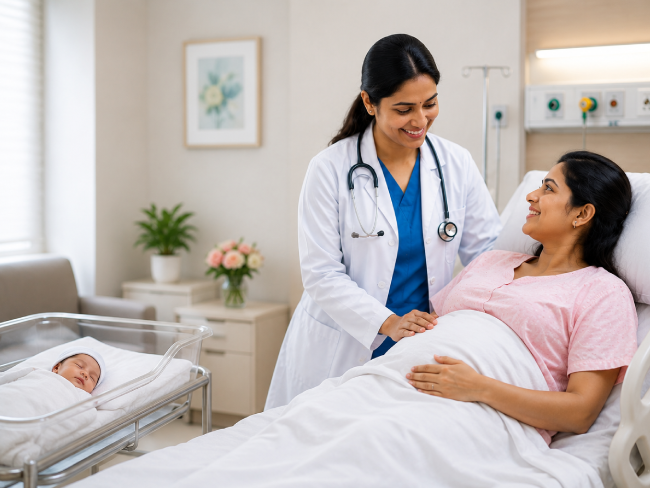
Normal and Painless Deliveries at Dr. Prathista Clinic
Supportive, Well-Monitored Vaginal Birth Care in Karimnagar
A normal vaginal delivery is, for most women, the safest way to have a baby, and it usually means a faster recovery and a quicker return to caring for your newborn. At Dr. Prathista Clinic, the focus is on supporting a natural birth wherever it’s safely possible -while making sure you have real pain relief options, and a doctor ready to step in with the right kind of help if labour needs it.
A lot of the fear around labour comes from not knowing what to expect. Below is a simple guide to the different aspects of normal delivery care we offer, so you can walk into labour feeling informed rather than anxious.
Not sure what kind of delivery is right for you? That’s completely normal to wonder about. Call us or book a consultation, and we’ll talk it through together.
Epidural Analgesia (Painless Normal Delivery)
An epidural is a form of pain relief given during labour through a fine tube placed in the lower back. It numbs sensation from the waist down, so contractions become far more bearable, while you stay fully awake and aware through the birth. Many women who choose an epidural are still able to push and deliver normally -it doesn’t take away your ability to have a vaginal birth, it simply takes away most of the pain.
Who it's for:
- Women who want a normal delivery but are anxious about labour pain
- Women whose labour is expected to be long, where an epidural can help conserve energy for pushing
- Anyone who wants the option available, even if they decide only during labour
Benefits:
- Significant relief from labour pain while you stay conscious and involved in the birth
- Doesn’t stop you from having a normal vaginal delivery
- Can be adjusted through labour depending on how you’re coping
- Often makes for a calmer, less exhausting birth experience
Instrumental Deliveries (Forceps or Vacuum)
Sometimes, towards the end of labour, the baby needs a little extra help being born -perhaps because the baby is in a slightly awkward position, or the mother is too tired to push effectively, or the baby needs to be delivered a bit faster for safety reasons. In these situations, a forceps or a vacuum (ventouse) device is used to gently guide the baby out during a contraction. This is still a vaginal delivery, just with some added assistance at the final stage.
Who it's for:
- Labour where the second stage (pushing) is taking longer than expected
- A baby’s position that makes pushing alone difficult
- Situations where the baby needs to be born a little quicker, for the baby’s or mother’s wellbeing
Benefits:
- Helps avoid an unnecessary caesarean when a vaginal birth is still very much possible
- Performed only when it’s genuinely needed, and only by an experienced obstetrician
- Usually a quick, well-controlled step at the very end of labour
- Mother still has a vaginal delivery with the benefits of a faster recovery
VBAC -Vaginal Birth After Caesarean
If you’ve had a caesarean before, it doesn’t automatically mean every delivery after that has to be a caesarean too. Many women who’ve had one C-section can safely have a vaginal delivery in a later pregnancy, provided certain conditions are met and labour is watched closely. This is known as VBAC, and it’s discussed and planned carefully with your doctor well before your due date.
Who it's for:
- Women who’ve had one previous caesarean and are keen to try for a vaginal birth this time
- Pregnancies where the reason for the earlier caesarean isn’t likely to repeat itself
- Anyone wanting to understand whether VBAC is a safe option for them
Benefits:
- A real chance at a vaginal birth, along with a shorter recovery than a repeat caesarean
- Avoids the added risks that come with multiple caesarean surgeries over time
- Closely monitored labour, with a caesarean still available immediately if it becomes necessary
- Personalised assessment of your suitability for VBAC, based on your history and this pregnancy
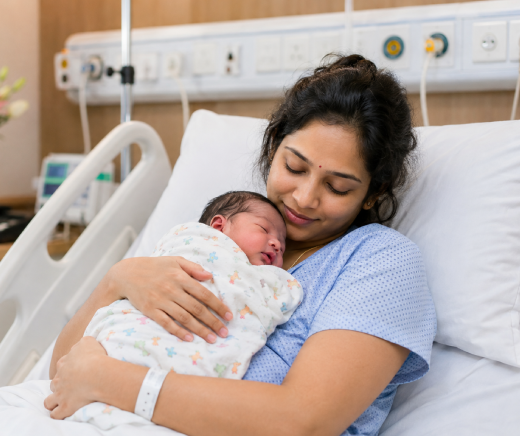
Full-Term Normal Vaginal Delivery
This is a vaginal birth that happens naturally once the pregnancy has reached full term, usually somewhere between 37 and 40 weeks. Labour is allowed to progress on its own as much as possible, with continuous monitoring of both mother and baby, and support at every stage -from early labour right through to the delivery itself.
- Healthy, low-risk, full-term pregnancies
- Women hoping for as natural a birth as possible, with medical support close at hand if needed
- Anyone wanting a clear idea of what to expect during labour and delivery
- Generally the fastest recovery of any mode of delivery
- Continuous monitoring keeps both mother and baby safe throughout labour
- Support available at every stage, with the option of pain relief if you want it
- Early skin-to-skin contact and breastfeeding support right after birth
Why Choose Dr. Prathista Clinic for Your Delivery?
- Strong focus on supporting safe, natural vaginal birth wherever possible
- Epidural and other pain relief options available for a more comfortable labour
- Experienced in VBAC and instrumental deliveries, handled only when truly needed
- Continuous monitoring of mother and baby throughout labour
- A calm, honest, and reassuring approach at every stage of your birth
Have Questions About Your Delivery? Let's Talk.
Whether this is your first baby or you're planning a VBAC after a previous caesarean, it helps to talk things through in advance so you know what to expect and what your options are.