
High-Risk Pregnancy Care
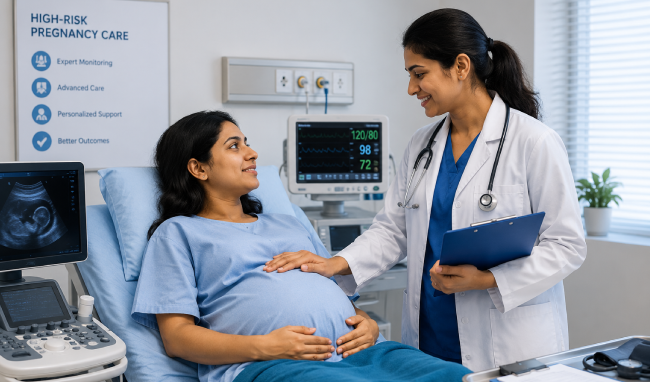
High-Risk Pregnancy Care at Dr. Prathista Clinic
Specialised, Watchful Care for a Safer Pregnancy in Karimnagar
Hearing the words “high-risk pregnancy” can be unsettling. But the truth is, with the right monitoring, timely decisions, and an experienced team by your side, most women with high-risk pregnancies go on to have safe deliveries and healthy babies.
A high-risk pregnancy simply means that you and your baby need a bit more attention than usual -more frequent check-ups, some extra tests, and a doctor who can act quickly if something needs looking into.
Dr. Prathista has considerable experience managing complex and high-risk pregnancies, and works closely with other specialists whenever a condition calls for it, so that every decision keeps both your safety and your baby’s wellbeing at the centre.
Below is an easy guide to the high-risk pregnancy conditions we manage.
Been told your pregnancy is “high-risk”? Don’t panic – call us or book a consultation, and we’ll walk you through it, step by step.
Pre-eclampsia and Eclampsia (Seizures and High BP in Pregnancy)
Pre-eclampsia is a condition where blood pressure rises during pregnancy, usually after the 20th week, often along with protein in the urine or other warning signs affecting the liver, kidneys, or blood clotting. If it isn’t caught and managed in time, it can progress to eclampsia, where the mother develops seizures. Both conditions can affect the mother and the baby, which is why early detection through routine antenatal visits matters so much.
Signs to watch for:
- Blood pressure readings that are higher than normal at your check-ups
- Sudden swelling in the hands, feet, or face
- Bad headaches that don’t go away, blurred or spotty vision, or pain in the upper abdomen
How we care for you:
- Regular blood pressure checks and urine tests at every visit
- Medicines to keep blood pressure at a safe level
- Extra scans to keep an eye on the baby’s growth and health
- A clear plan for delivery, timed to protect both mother and baby if things start to worsen
Placenta Previa and Placenta Accreta Syndrome
Placenta previa happens when the placenta sits low in the uterus and covers part or all of the birth canal, instead of being higher up as usual. Placenta accreta is a related but more serious condition, where the placenta grows too deeply into the wall of the uterus. Both raise the risk of heavy bleeding and need to be handled with extra care, especially if you’ve had a caesarean before.
Signs to watch for:
- Bleeding from the vagina later in pregnancy that isn’t accompanied by pain
- Usually first picked up on a routine ultrasound
- More common in women who’ve had a C-section or other uterine surgery before
How we care for you:
- A detailed ultrasound, and an MRI if needed, to check exactly where the placenta sits and how deep it has grown
- Careful planning of when and how you deliver, usually by caesarean
- Blood kept ready in advance in case a transfusion is needed
- A surgical team on standby for the more complex placenta accreta cases
Heart Disease in Pregnancy
The heart has to work harder during pregnancy, and this can be a real concern for women who already have a heart condition, whether it’s something they were born with, a valve problem, or something that developed later. These pregnancies need closer watching from a heart specialist and an obstetrician working together, right from the early stages through labour and after delivery.
Signs to watch for:
- A heart condition that was already known before pregnancy
- Breathlessness, a racing heart, or tiredness that feels more than what’s normal in pregnancy
- A history of heart surgery, or being told you have a heart murmur
How we care for you:
- Care shared between a cardiologist and your obstetrician throughout the pregnancy
- Regular checks on how your heart is coping, alongside your baby’s growth
- A delivery plan built around your specific heart condition
- Close watching during labour and in the hours right after delivery

Epilepsy in Pregnancy
Most women with epilepsy go on to have safe pregnancies and healthy babies. The main things to get right are keeping seizures under control and choosing medicines that carry the lowest possible risk to the baby, since not all anti-seizure medicines are equally safe in pregnancy.
- A known history of epilepsy or seizures
- Currently taking medication to control seizures
- Working with your neurologist to review your medicines and adjust them if needed
- Closer monitoring, since some anti-seizure medicines can affect how the baby develops
- A plan in place for managing seizures during labour and delivery
- Extra folic acid and nutrition support, as advised by your doctor
Diabetes in Pregnancy
This covers both diabetes a woman already has before pregnancy and gestational diabetes, which develops during pregnancy itself. When blood sugar isn’t well controlled, it can lead to a larger-than-usual baby, and can add risks around the time of delivery, so keeping sugar levels steady matters throughout.
Signs to watch for:
- Blood sugar levels that come back high on the routine glucose test done in pregnancy
- Diabetes that was already there before you became pregnant
- Risk factors like being overweight, a family history of diabetes, or a previous baby who was large at birth
How we care for you:
- Regular blood sugar checks along with guidance on diet
- Medication or insulin where needed, with doses adjusted as the pregnancy progresses
- Extra ultrasounds to track how the baby is growing
- A delivery plan timed to reduce risks for both mother and baby
Intra-Uterine Growth Restriction (IUGR) in Pregnancy
IUGR means the baby is growing slower than expected inside the womb. There are several possible reasons for this, often related to how well the placenta is supplying the baby with nutrients and oxygen. Once it’s picked up, it needs regular monitoring so that delivery can be planned at the safest possible time.
Signs to watch for:
- The baby measuring smaller than expected on a growth scan
- Feeling fewer movements from the baby than usual
- Usually first noticed during a routine growth scan
How we care for you:
- Regular growth scans along with Doppler studies to check blood flow to the baby
- Ongoing checks on how the baby is coping
- A delivery timed carefully -not too early, and not too late -based on what’s safest for the baby
- Working closely with the newborn care team if early delivery becomes necessary
Preterm Deliveries
A preterm delivery is one that happens before 37 weeks. Some women have a higher chance of going into labour early, and the aim of care is either to help delay labour where possible, or to manage it as safely as possible when it can’t be avoided.
Signs to watch for:
- Having had a preterm delivery before
- A shorter-than-normal cervix, picked up on ultrasound
- Signs of early labour, such as regular contractions, pressure in the pelvis, or fluid leaking before your due date
How we care for you:
- Checking cervical length through ultrasound in pregnancies at higher risk
- Medicines that can help delay labour or help the baby’s lungs mature faster, when early delivery seems likely
- Working closely with a newborn care team
- A plan that’s adjusted depending on how early delivery might happen
Renal Disease in Pregnancy
Kidney disease can make pregnancy more complicated, and pregnancy itself can put extra strain on the kidneys. Careful, regular monitoring helps protect both the mother’s kidney function and the baby’s development through the pregnancy.
Signs to watch for:
- Kidney disease that was already there before pregnancy
- Protein showing up in urine tests, or kidney function tests coming back abnormal during pregnancy
- A history of dialysis or a kidney transplant
How we care for you:
- Care shared with a nephrologist (kidney specialist) throughout the pregnancy
- Regular checks on kidney function and blood pressure
- Close monitoring of the baby’s growth
- A delivery plan adjusted to how severe the kidney condition is
Liver Disease in Pregnancy
This includes conditions such as intrahepatic cholestasis of pregnancy, which causes intense itching due to changes in how the liver works during pregnancy, as well as liver disease a woman may already have. Both need watching, since certain liver conditions can affect the baby if they aren’t picked up and managed in time.
Signs to watch for:
- Itching that doesn’t go away, especially on the palms and soles, without any rash to explain it
- Liver function tests coming back abnormal during pregnancy
- Liver disease that was already present before pregnancy
How we care for you:
- Regular liver function tests through the pregnancy
- Medicines to ease symptoms and protect the baby where needed
- Closer monitoring, and often an earlier delivery, for conditions like cholestasis
- Working with a liver specialist (hepatologist) if there’s an existing liver condition
All Other High-Risk Pregnancy Cases
No two pregnancies are the same, and some risks don’t fall neatly into one category. This can include carrying twins or more, thyroid problems, autoimmune conditions, clotting disorders, obesity, being an older mother, or a complicated history from previous pregnancies or deliveries. Whatever the reason your pregnancy needs closer attention, care is built around your specific situation.
Signs to watch for:
- A medical condition you already had before this pregnancy
- A complicated pregnancy or delivery history
- Any pregnancy your doctor has told you needs closer watching, for any reason
How we care for you:
- A care plan built specifically around your condition and history
- Regular, closer monitoring right through the pregnancy
- Bringing in the right specialists as and when needed
- A delivery plan shaped by your individual risk factors
Why Choose Dr. Prathista Clinic for High-Risk Pregnancy Care?
- Experienced in managing complex and high-risk pregnancies
- Close, regular monitoring built around your specific condition
- Care coordinated with cardiologists, nephrologists, neurologists, and other specialists whenever needed
- Access to advanced scans and fetal monitoring
- A clear, well-explained delivery plan, so you're never left wondering what comes next
Worried About Your Pregnancy? You Don't Have to Navigate This Alone.
If you've been told your pregnancy is high-risk or you have a medical condition and are planning to become pregnant - getting specialised care early on makes a real difference to the outcome for you and your baby.