
Hysteroscopic Procedures and Surgeries
Hysteroscopic Procedures and Surgeries at Dr. Prathista Clinic
Precise, Scarless Care for the Uterus in Karimnagar
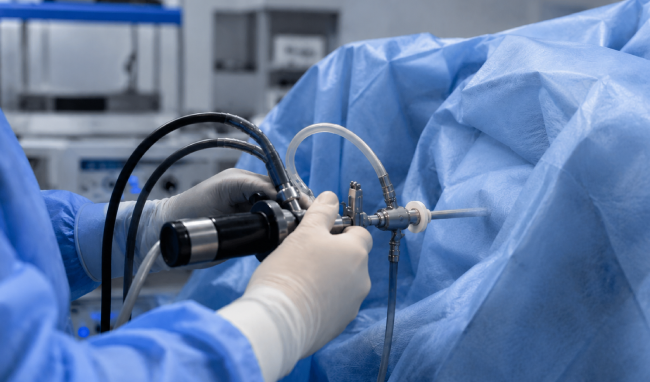
Hysteroscopy is a way of examining and treating problems inside the uterus using a thin camera passed through the vagina and cervix -meaning no cuts on the abdomen at all. Many conditions that affect periods, pregnancy, or fertility actually begin inside the uterine cavity itself, and hysteroscopy allows the doctor to see and treat these directly.
Because there’s no external incision, most hysteroscopic procedures are done as day-care surgery, with a quick return to your normal routine.
Dr. Prathista has considerable experience in hysteroscopic surgery, especially where fertility is a concern, and takes care to protect the uterine lining during every procedure.
Below is an easy guide to the hysteroscopic procedures we offer.
Not sure which of these applies to you? That’s completely fine – call us or book a consultation, and we’ll help you figure out the right next step.
Diagnostic Hysteroscopy
Diagnostic hysteroscopy lets the doctor look directly inside the uterus using a thin, lighted camera passed through the vagina and cervix -no cuts are needed at all. It’s often used to find out why a woman is having abnormal bleeding, repeated miscarriages, or difficulty conceiving, when scans alone haven’t given a clear enough picture.
Who it's for:
- Abnormal or heavy uterine bleeding
- Repeated miscarriages or failed embryo transfers
- Suspected polyps, fibroids inside the cavity, or scar tissue
Benefits:
- A day-care procedure -most women go home the same day
- Gives a direct, accurate view inside the uterus rather than relying on scans alone
- Can often move straight into treatment if something needs to be corrected during the same procedure
Hysteroscopic-Guided RPOC Removal
RPOC stands for retained products of conception -this is when some pregnancy tissue remains in the uterus after a miscarriage, abortion, or delivery, instead of passing out completely on its own. Using hysteroscopy, this tissue can be removed under direct vision, which is far gentler on the uterus than a blind procedure.
Who it's for:
- Ongoing bleeding or infection after a miscarriage or delivery
- Retained tissue confirmed on ultrasound after a pregnancy loss
- Women wanting the uterus cleared as gently as possible, especially if they hope to conceive again
Benefits:
- Removes retained tissue precisely, under direct visual guidance
- Much gentler on the uterine lining than a blind D&C
- Lower risk of scarring inside the uterus, which matters for future fertility
- Usually a quick day-care procedure
Hysteroscopic-Guided Septal Resection
A uterine septum is a band of extra tissue dividing the uterine cavity, present from birth, which can sometimes lead to repeated miscarriages or difficulty conceiving. Hysteroscopic septal resection carefully cuts away this dividing tissue from inside the uterus, without any external incision, to create a single, normal-shaped cavity.
Who it's for:
- Women with a uterine septum found on ultrasound, MRI, or a previous hysteroscopy
- Repeated first-trimester miscarriages with no other clear cause
- Women preparing for IVF or planning pregnancy who have a known septum
Benefits:
- Can meaningfully improve the chances of carrying a pregnancy to term
- Performed entirely from inside the uterus -no cuts on the abdomen
- Quick recovery, with most women resuming normal activity within a few days
- Often a one-time correction that benefits future pregnancies
Hysteroscopic-Guided Myomectomy
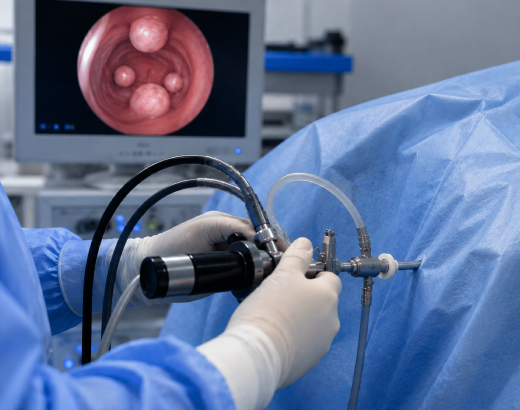
This is the removal of fibroids that are growing inside the uterine cavity, done entirely through the vagina and cervix using a hysteroscope -no abdominal cuts required. It’s particularly useful for fibroids that are causing heavy periods or interfering with a pregnancy taking hold.
- Fibroids growing inside the uterine cavity (submucosal fibroids)
- Heavy or prolonged periods linked to a cavity fibroid
- Infertility or repeated implantation failure where a cavity fibroid may be a factor
- No abdominal incision at all -the entire procedure is done through the natural passage
- Often noticeably reduces heavy bleeding once the fibroid is removed
- Can improve the chances of a pregnancy implanting successfully
- Typically a day-care procedure with a fast return to normal activity
Hysteroscopic-Guided Adhesiolysis
Adhesions, sometimes called Asherman’s syndrome, are bands of scar tissue that form inside the uterus, often after a previous D&C, infection, or surgery. These can partially or fully block the uterine cavity. Hysteroscopic adhesiolysis carefully separates this scar tissue under direct vision, aiming to restore the uterus to a more normal shape.
Who it helps:
- A history of very light or absent periods after a uterine procedure
- Difficulty conceiving following a previous D&C or uterine infection
- Adhesions confirmed on a prior scan or hysteroscopy
Benefits:
- Restores the uterine cavity to a more normal shape, under direct visual control
- Can improve periods and the chances of conceiving afterward
- Far more precise and safer than a blind approach to breaking down adhesions
- Often combined with follow-up care to help prevent the adhesions from re-forming
Hysteroscopic-Guided Tubal Cannulation (for Blocked Tubes)
When a fallopian tube is blocked at the point where it joins the uterus, a fine catheter can sometimes be passed through the tube’s opening, guided by hysteroscopy, to clear the blockage from inside. This is a less invasive option compared to surgery on the tube itself.
Who it helps:
- Tubal blockage detected right at the point where the tube meets the uterus
- Infertility linked to blockage at this specific location
- Women looking for a less invasive alternative before considering IVF
Benefits:
- A less invasive way to try clearing certain tubal blockages
- Can be done without any abdominal cuts
- May restore natural tubal function, offering a chance at natural conception
- A reasonable option to explore before moving to more involved fertility treatments
Hysteroscopic-Guided PRP Injection (Fertility-Enhancing Procedure)
Platelet-Rich Plasma, or PRP, is prepared from a small sample of your own blood and is placed directly into the uterine lining using hysteroscopic guidance. This is used in an effort to improve the thickness and receptiveness of the lining, particularly for women whose lining hasn’t responded well to standard treatment.
Who it helps:
- A thin uterine lining that hasn’t improved with medication alone
- Repeated failed embryo transfers linked to poor lining growth
- Women preparing for IVF who want to give the lining the best possible chance
Benefits:
- Uses your own blood -no external drugs or donor material involved
- Placed precisely into the lining under direct hysteroscopic view
- May help improve lining thickness and receptiveness in select cases
- A supportive option often used alongside fertility treatment, not instead of it
Why Choose Dr. Prathista Clinic for Hysteroscopic Care?
- Experienced in the full range of hysteroscopic procedures, from diagnosis to complex fertility-related surgery
- No abdominal incisions -most procedures are day-care with a fast recovery
- Extra care taken to protect the uterine lining, especially important for future fertility
- Personalised evaluation before any procedure -nothing is one-size-fits-all
- Clear explanations at every step, so you always know what to expect
Not Sure If Hysteroscopy Is the Right Step for You?
Many of these procedures are recommended after a scan or a fertility work-up points to something inside the uterine cavity. If you've been told you might need one of these, or you simply want a second opinion, it helps to talk it through first.